
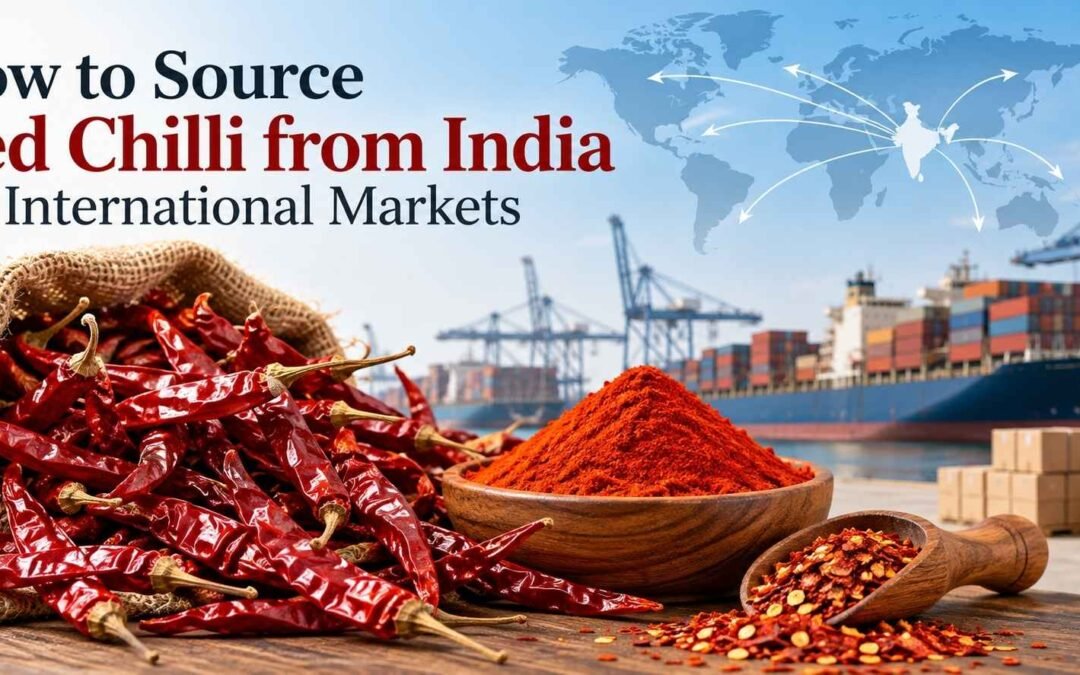
How to Source Red Chilli from India for International Markets
India is one of the world's major producers and exporters of red chilli, supplying whole dried chillies, chilli powder, crushed chilli, flakes, and customized chilli products to food manufacturers, spice importers, wholesalers, distributors, and private-label brands worldwide.
For international buyers, sourcing red chilli from India can provide access to a wide range of varieties, heat levels, colours, processing options, and packaging formats. However, successful sourcing requires careful attention to product specifications, quality, food safety, documentation, packaging, and supplier reliability.
This guide explains how international buyers can source red chilli from India efficiently and confidently.
Why Source Red Chilli from India?
Indian red chillies are widely used in food processing, spice blends, sauces, seasonings, ready-to-eat foods, restaurants, and retail products.
India offers buyers access to different chilli varieties with different characteristics, including colour, pungency, size, flavour, and intended application.
Some commonly traded Indian chilli varieties include:
-
Guntur Chilli – known for its strong pungency and widely used in food processing and spice blends.
-
Byadgi Chilli – valued for its deep red colour and comparatively lower pungency.
-
Kashmiri Chilli – commonly selected when colour is an important requirement.
-
Teja Chilli – known for higher pungency and used in various spice applications.
-
Sannam Chilli – used in food processing and international spice markets.
The appropriate variety depends on the buyer's required ASTA colour, pungency, moisture, size, appearance, application, and market requirements.
Step 1: Define Your Red Chilli Requirements
Before contacting an Indian supplier, clearly define your product requirements.
Important specifications may include:
Product Form
Depending on your application, you may require:
-
Whole dried red chilli
-
Stemless red chilli
-
Red chilli powder
-
Crushed red chilli
-
Red chilli flakes
-
Customized grind or mesh size
Variety
Choose the chilli variety according to the required:
-
Colour
-
Heat level
-
Flavour
-
Size
-
Application
-
Market preference
Quality Specifications
Your purchase specification may include:
-
Moisture
-
Pungency
-
Colour value / ASTA colour
-
Size and appearance
-
Foreign matter
-
Broken pods
-
Stem content
-
Microbiological parameters
-
Pesticide residue requirements
-
Aflatoxin requirements
-
Other destination-country food safety requirements
A clearly defined specification helps suppliers provide a more accurate quotation and reduces misunderstandings during procurement.
Step 2: Choose the Right Indian Chilli Variety
Not every chilli variety is suitable for every application.
For example, a food manufacturer looking for strong colour may have different requirements from a buyer manufacturing hot sauces or chilli-based seasonings.
Red Chilli for Colour
Varieties such as Byadgi and Kashmiri chilli are often considered for applications where red colour is an important characteristic.
Red Chilli for High Pungency
Buyers looking for stronger heat may consider varieties such as Teja and other high-pungency chilli grades.
Red Chilli for Processing
Food processors may purchase whole chillies, stemless chillies, crushed chilli, flakes, or powder depending on their manufacturing process.
The best choice should therefore be based on your technical product specification rather than variety name alone.
Step 3: Evaluate Your Indian Supplier
Supplier selection is one of the most important parts of international sourcing.
Before placing a bulk order, evaluate the supplier's:
-
Product sourcing capability
-
Processing facilities
-
Quality-control procedures
-
Export experience
-
Packaging capability
-
Documentation
-
Product testing process
-
Supply capacity
-
Communication and response time
-
Ability to meet your specifications consistently
Ask the supplier to provide relevant company and product information before proceeding with a commercial order.
For larger or recurring purchases, buyers may also consider supplier audits, third-party inspections, or pre-shipment inspections.
Step 4: Request a Red Chilli Sample
Never rely only on photographs or a product description when purchasing a large quantity.
Request a representative sample and evaluate it against your requirements.
Depending on your application, you may check:
-
Colour
-
Aroma
-
Pungency
-
Moisture
-
Physical appearance
-
Size
-
Cleanliness
-
Foreign matter
-
Stem content
-
Powder quality, if applicable
For commercial imports, laboratory testing may also be appropriate for parameters required by the destination market.
A sample approval process can help establish the quality benchmark for the final shipment.
Step 5: Check Food Safety and Quality Requirements
Food safety requirements can differ between importing countries.
International buyers should identify the requirements applicable to their destination market before finalizing the purchase.
Depending on the destination and product, buyers may need to consider:
-
Pesticide residue limits
-
Aflatoxin limits
-
Microbiological requirements
-
Heavy metals
-
Moisture
-
Foreign matter
-
Food-contact packaging requirements
-
Labelling requirements
-
Phytosanitary requirements
-
Other import regulations
Testing should be carried out according to the agreed product specification and applicable destination-market requirements.
Step 6: Select Suitable Packaging
Red chilli can be supplied in different packaging formats depending on the buyer's requirements.
Common bulk options include:
-
PP bags
-
Laminated bags
-
Vacuum packaging
-
Cartons
-
Food-grade bulk bags
-
Customized export packaging
For retail or private-label requirements, buyers may request:
-
Printed pouches
-
Stand-up pouches
-
Retail bags
-
Customized branded packaging
Packaging should protect the product from moisture, contamination, handling damage, and other conditions that may affect quality during transportation.
Step 7: Confirm MOQ and Supply Capacity
Before placing an order, confirm:
-
Minimum Order Quantity (MOQ)
-
Monthly supply capacity
-
Production lead time
-
Packaging lead time
-
Shipment schedule
-
Port of loading
-
Container-loading capacity
-
Availability of repeat supply
For international buyers, consistency is often as important as the initial price.
If you plan to import regularly, discuss a supply schedule with the supplier instead of treating every purchase as a separate transaction.
Step 8: Understand Export Documentation
A professional export supplier should be able to coordinate the documentation required for the shipment.
Depending on the destination country and transaction, documentation may include:
-
Commercial Invoice
-
Packing List
-
Certificate of Origin
-
Bill of Lading
-
Phytosanitary Certificate, where applicable
-
Certificate of Analysis (COA)
-
Fumigation Certificate, where applicable
-
Health or other regulatory certificates, where required
-
Additional documents requested by the importing country
The exact documentation should be confirmed with the importer, customs broker, and relevant authorities for the destination market.
Step 9: Discuss Shipping Terms
International buyers should clearly establish the commercial terms before confirming an order.
Common Incoterms may include:
-
EXW
-
FOB
-
CFR
-
CIF
Your quotation should clearly specify what is included in the price.
Also confirm:
-
Port of loading
-
Destination port
-
Shipping schedule
-
Transit time
-
Insurance responsibility
-
Freight responsibility
-
Payment terms
Clear commercial terms help avoid unexpected costs later.
Step 10: Compare Suppliers Beyond Price
Price is important, but it should not be the only factor when sourcing food ingredients internationally.
A lower quotation may not provide the same product specification, testing, packaging, documentation, or consistency as another supplier.
When comparing quotations, consider:
Product quality + specification compliance + testing + packaging + documentation + supply reliability + logistics + total landed cost
This gives buyers a more complete picture of the actual sourcing cost.
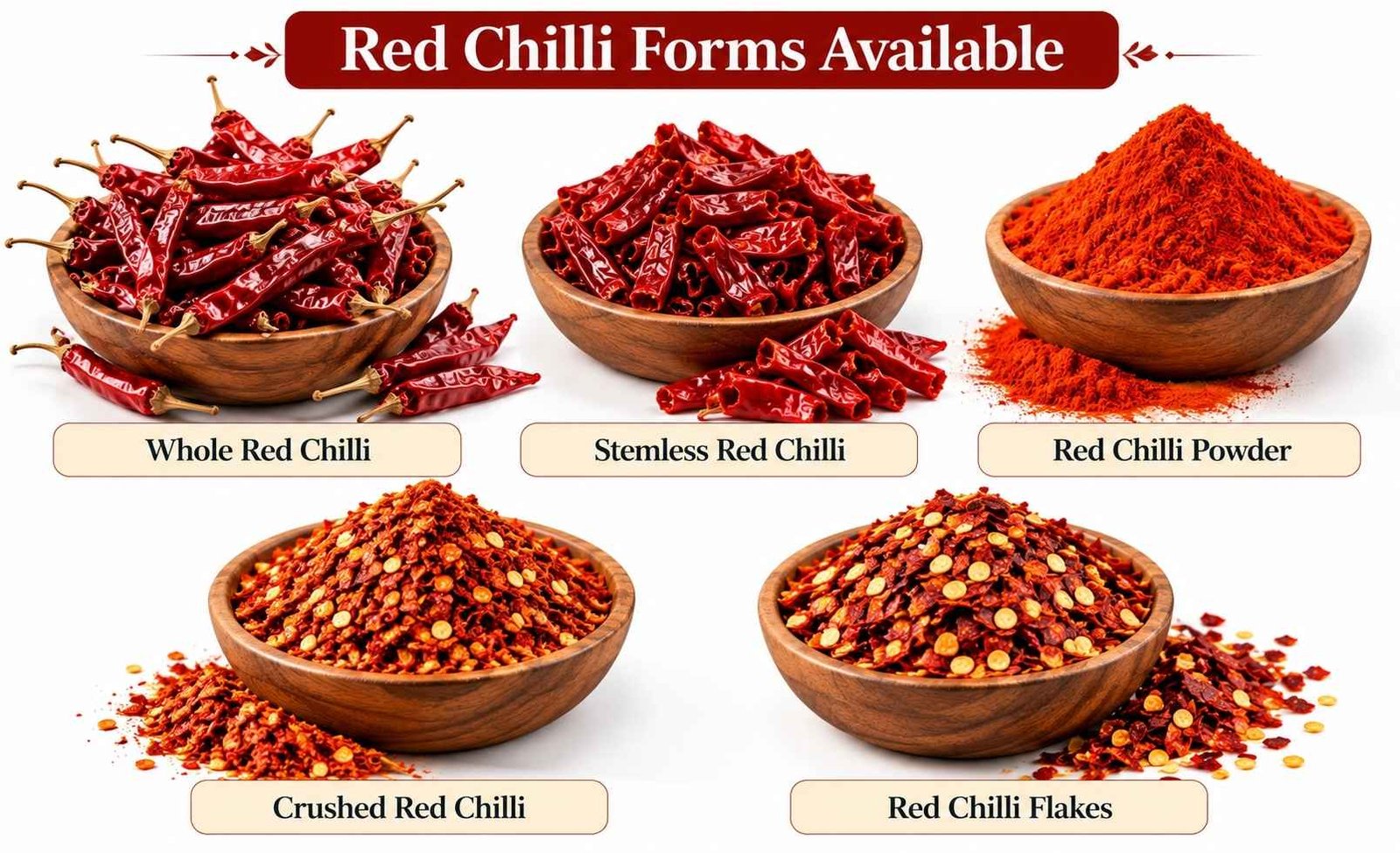
Red Chilli Forms Available from India
Indian suppliers can provide red chilli in several forms depending on the buyer's requirements.
Whole Red Chilli
Suitable for spice trading, food processing, restaurants, spice grinding, and further processing.
Stemless Red Chilli
Stemless chilli can be preferred by processors looking to reduce additional cleaning and preparation requirements.
Red Chilli Powder
Suitable for spice blends, sauces, seasonings, food manufacturing, and retail products.
Crushed Red Chilli
Commonly used in seasoning blends, foodservice applications, pizza toppings, sauces, and processed foods.
Red Chilli Flakes
Used in foodservice, seasoning, sauces, snacks, and retail applications.
How to Import Red Chilli from India
A typical sourcing process can be structured as follows:
Requirement → Supplier Selection → Quotation → Sample → Testing → Specification Approval → Commercial Order → Production/Processing → Inspection → Documentation → Shipment → Delivery
Keeping these stages clearly documented can make international procurement more efficient.
Questions International Buyers Should Ask a Red Chilli Supplier
Before placing an order, consider asking:
- Which red chilli varieties do you supply?
- What are the available heat levels?
- What is the ASTA colour value?
- What is the moisture specification?
- Is the chilli available whole, stemless, powdered, crushed, or as flakes?
- What is the MOQ?
- What packaging options are available?
- Can you provide a product sample?
- Can you provide a Certificate of Analysis?
- What quality and food-safety testing is available?
- What is your monthly supply capacity?
- Which export documents can you provide?
- What is the estimated production lead time?
- Which Indian port will the shipment depart from?
- What Incoterms and payment terms are available?
Why Work with an Experienced Indian Red Chilli Exporter?
Working with an experienced supplier can simplify the sourcing process from product selection through shipment.
A reliable export partner should be able to support buyers with:
- Product sourcing
- Variety selection
- Quality specifications
- Processing options
- Product sampling
- Packaging
- Quality documentation
- Export documentation
- Logistics coordination
- Bulk supply
- Customized requirements
For buyers developing a long-term supply chain, consistent communication and specification control can be particularly important.
Source Red Chilli from India with Foodyards
At Foodyards.in, we support international buyers looking to source Indian agricultural and food products for global markets.
Our red chilli sourcing can be tailored according to buyer requirements, including whole red chilli, stemless chilli, chilli powder, crushed chilli, flakes, customized specifications, and export-ready packaging.
Whether you are a spice importer, food manufacturer, distributor, wholesaler, restaurant supplier, or private-label brand, we can discuss your required specification and sourcing requirements.
Looking to Import Red Chilli from India?
Share your requirements with the Foodyards export team, including:
- Red chilli variety
- Required form
- Quantity
- Quality specifications
- Packaging requirements
- Destination country
- Target shipment schedule
We can help you evaluate the appropriate product and sourcing requirements for your international market.
Request a quotation from Foodyards.in and start sourcing red chilli from India.
Frequently Asked Questions
Which red chilli varieties can be sourced from India?
Commonly traded Indian varieties include Guntur, Byadgi, Kashmiri, Teja, and Sannam, among others. Availability and specifications can vary by supplier and season.
Can I buy red chilli powder from India?
Yes. Red chilli can be supplied as whole dried chilli, stemless chilli, powder, crushed chilli, flakes, and other customized forms.
What specifications should I provide when requesting a quotation?
Provide the variety, form, quantity, moisture requirement, colour requirement, pungency/heat requirement, packaging, destination country, and any testing or regulatory specifications.
Can red chilli be supplied in customized packaging?
Yes. Bulk and customized packaging options can be discussed according to the buyer's product and market requirements.
What documents are required to import red chilli?
Requirements vary by destination country. Typical export documentation can include commercial invoice, packing list, certificate of origin, bill of lading, certificate of analysis, and applicable phytosanitary or other regulatory certificates.
What is the MOQ for Indian red chilli?
MOQ depends on the product form, variety, quality, packaging, and supplier. Buyers should request a quotation based on their required quantity and specifications.
How can I get a red chilli sample?
International buyers can contact the supplier with their required variety and specifications and request a representative sample before confirming a bulk order.
Final Thoughts
Sourcing red chilli from India can give international buyers access to a broad range of varieties, processing options, and packaging solutions. The key to successful procurement is to define your specification clearly, evaluate suppliers carefully, approve samples, verify quality requirements, and establish transparent commercial and shipping terms.
For long-term sourcing, focus on consistent specifications, food safety, reliable supply, documentation, and communication rather than price alone.
Looking for an Indian red chilli supplier? Contact Foodyards.in to discuss your bulk sourcing requirements